Get in loser, let's get ficcing!
An Introduction

Welcome to Get in loser, let’s go ficcing, a substack dedicated to a motley collection of thoughts on writing, whatever philosophical ramblings I have at hand, and a documentation of one person’s journey toward traditional publication.
The title, of course, is taken from this memorable moment from the film Mean Girls.

Publication timelines
The goal is to have one entry a month. Ideally, that gives me time to gather my thoughts and won’t crowd your inbox.
This leads me to…
January 2022
I’ve been thinking a lot about cynicism and sentimentalism. The former is accepted as a cool and detached approach to the world while the latter is often mocked for being maudlin or sappy (think of how people sneer at romance novels, which are soaked in sentimentalism). Yes, I’m aware I’m being vague but I spend a lot of time on TikTok and Twitter and I read too many cynical, disparaging posts. Except, of course, when it comes to crypto. Then maudlin is absolutely acceptable.
There was an article recently on Vox this year that talked about the optimism in our pop culture during the Obama years and how that’s been mocked and exchanged for a cool sort of distance. That sentimental attachment is somehow off-putting. Enthusiasm has cheapened the true delight of a piece and rendered it too earnest and undesirable.
I am thinking here of the pieces in the Vox article, such as Harry Potter (yes, I’m aware of the problems with the author) and Hamilton (yes, I’m aware of the problems with the author. And the man himself). I wonder if the issue has less to do with the emotions surrounding the pieces and more with the insistent urge of capitalism to turn meaning making items into easily consumable goods. And with our eliding of the author and the work.
(I don’t want to delve into Death of the Author because its been a long time since I read Barthes and I’m not prepared for it)
If nothing is perfect, if the author absolutely influence the art itself and renders it too problematic to engage with, then we are entering the fertile grounds of cynicism. Since nothing can be perfect, then everything can be mocked. It becomes too dangerous to openly embrace things. It becomes too dangerous to express one’s emotions.
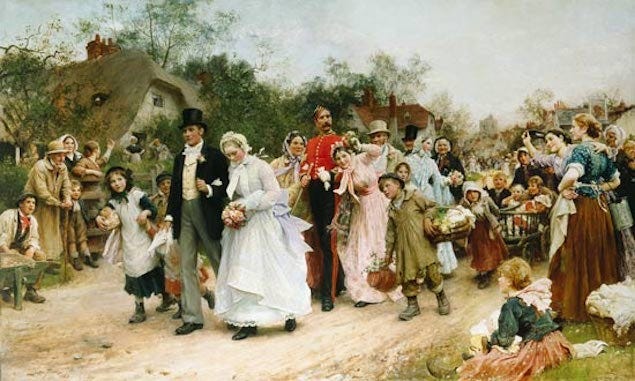
I am wondering if the act of expressing one’s self, of embracing something thoroughly, becomes the way to counteract cynicism (I don’t mean the Greek school of philosophy cynicism, but the too far pushed idea of skepticism and distrust). Sentimentalism is an 18th century school of thought, both in philosophy and literature, that rested upon the capacity for feeling and using this as a way to pursue truth. And I don’t mean Truth but truths—smaller nuggets, perhaps no less easily attained, that provide illumination and discovery.
Sentimentalism encouraged the display of emotions. It didn’t indicate weakness, but instead great feeling and courage. It leads to sympathy, which is the bedrock for civilized discourse and society. I take my understanding of sympathy from Adam Smith’s Theory of Moral Sentiments. Smith posited that sympathy comes from the logic of mirroring.
We see someone suffering. We imagine ourselves in a similar position. We sympathize or, “tremble and shudder at the thought of what he feels.” Sympathy isn’t an automatic state of being. Smith states that context is sometimes required; for example, anger is harder to sympathize with, unless we understand the event in which it bloomed.
Because of our capacity for imagination, we are able to achieve sympathy. We are able to express emotions—tenderness, care, compassion—and soothe a wound or elevate a problem toward a path of resolution.
The issue, of course, is that displaying such emotions place one at risk for being mocked, accused of playing a fool, or being addicted to pain. (We are leaving the 18th century here for the 19th century, where this concern is quite plain in Wilde and Twain’s writings, both frustrated romantics) Sentimentalism and nostalgia are blurred until they become the same, and nostalgia is dangerous.
This leads me all to say that I am beginning this year thinking about sentimentalism and sympathy and embracing them more. It is perhaps not the answer to problem of cynicism. It will inevitable lead to disappointment. But it could be a path out of the quagmire of hopelessness and disaffectedness.
Emerson tells us in Experience:
Text within this block will maintain its original spacing when publishedNever mind the ridicule, never mind the defeat; up again, old heart!-it seems to say, there is victory yet for all justice; and the true romance which the world exists to realize, will be the transformation of genius into practical power. Text within this block will maintain its original spacing when publishedText within this block will maintain its original spacing when published
I’m not sure entirely what this means, and I know I’ve been exhorted never to read Emerson as a collection of aphorisms and self-help, a la The Secret; but, I think if we are to combat the rising tide of dissolution, then sympathy and sentimentalism must be tools in that struggle. Being a sap is better than being nothing at all, perhaps. And disappointment only means that we lived.
Last Thoughts…
A couple of books I’ve read in 2021 which I cannot stop talking about:
A Spindle Splintered by Alix E Harrow
Gideon the Ninth by Tasmyn Muir
“Nothing but Blackened Teeth” by Cassandra Kraw
Thanks for reading Get in loser we're going ficcing ! Subscribe for free to receive new posts and support my work.
*Yes, expect many parenthetical statements. It’s how my brain works.


