Donald Trump and the Long 19th Century
Another Gilded Age

Donald Trump appeals to people’s self-righteousness, to their sense of destiny, and to nostalgia.
Nostalgia is trap, especially when gilded with sentimentality (sorry my 18th centurians!) By sentimentality, I mean that candy coated gloss that makes the past appear misty, flawless and, subsequently, enshrined. Sealed away from the harmful influences of truth and bitter feelings. No longer tainted by grief*, but somehow true and good.
Our, meaning America’s, relationship to nostalgia and the past, is the result of a successful project of the Lost Cause. The Lost Cause is the name for the Southern project of reclaiming history and recasting Confederates as heroes. It is soaked in romantic images of plantations, and Spanish moss draped live oaks, and Southern belles flirting with gentlemen.
(never mind these gild a history of pain and cruelty)
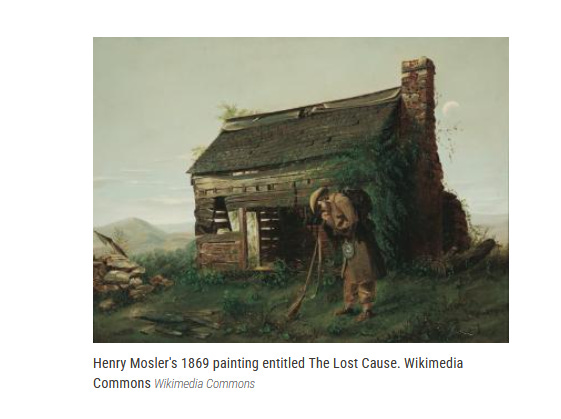
This image of the South is present in our films, our books, our TV shows, and, as a result, our politics. Our consumerism and cultures have made it less appalling and more appealing. And, as a result, has helped prepare the ground for Donald Trump.
There was a joke about the long 18th century and a very lovely essay about how we are in the end of the long 20th century.
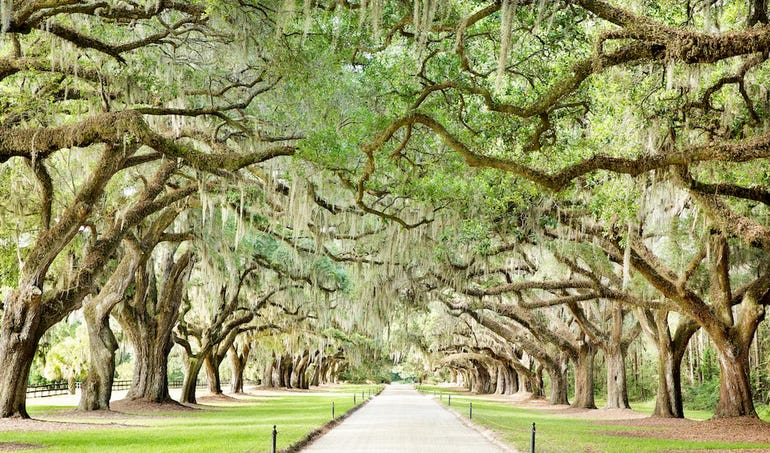
But I think this nostalgia, this current moment, is a 19th century project.
Some of it is in their very direct language about re-litigating the 14th Amendment—which we did in the Civil War—but his economic plan is grounded in the 19th century.
Here are some facts about the 19th century, particularly during the Gilded Age, which was roughly 1870s to the 1910s:
- America was deep in the grip of Manifest Destiny, believing that they owned all this land and they took it, often in violent ways. Westward Expansion happened pre-Civil War but it was cemented in place by the railroads in 1869
- America was a weak player on the national stage. The main players were still Great Britain and France, and Russia. We were a footnote and we were ok with it because (next bullet)
- America was an isolationist state. Isolationism is the idea that a country doesn’t need to be in relations with others and is able to build everything it needs itself. The US has a long and storied history of isolationism, beginning with Washington and the French Revolution.
- America liked tariffs. America didn’t have a strong taxing policy until the early 20th century with the 16th Amendment in 1913. However, that didn’t mean America didn’t have taxes. We had a flat tax during the Civil War, which ended in 1872. We had an income tax in 1894 and estate taxes, and then smaller taxes like whiskey and milk and tariffs. Tariffs were how the federal gov’t funded itself until the income tax in 19713, and how it enforced protectionism—the idea that Americans are self-sufficient and don’t need foreign labor and foreign products. Tariffs are taxes posed on certain items, and have been used as an argument for the reason of the Civil War (its slavery, don’t let these arguments fool you. Who was the economic engine of the South? Slaves)
- I’m off track. Trump loves tariffs. They allow him to be an isolationist, to punish people he wants to punish and weaken the federal government.
- The federal government was smaller and weaker in the 19th century. The federal gov’t that most of us know came out of FDR’s New Deal and WW2. Because the federal gov’t was weak, labor was at its weakest in the 19th century. There were little to no labor laws or protections.
- Trump has made it clear that he wants to undo the FTC’s work, the NLRB’s work and a lot of the DOL’s work.
- And the wealthy were obscenely wealthy (here’s a link on the Bradley-Martin party) and people were poor and paid too much to live in shit apartments, and there were little rules placed on them.
All of this is documented in a wonderful PBS documentary, the Gilded Age which is actually free on YouTube right now. Its 2 hours and an excellent primer to the Trump admin. It’s called the Gilded Age because Mark Twain and Charles Dudley Warner wrote a novel by that name about, primarily, the public and private corruption in the world. It is a vicious take down of the American gov’t and the wealthy.
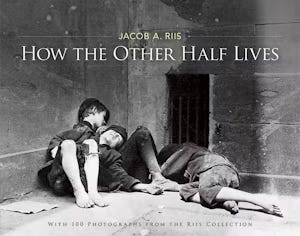
This feels overwhelming. And when you think about how bad it got in the 19th century—how Vanderbilt got around building regulations by saying he owned land not buildings—and it got bad—there is a sense of hope, that I have, that we got out of it.
People got out of it and laid the foundations for the movements that would shape the 20th century. We’ve got all of history behind us, all of the people behind us, who did it before and who made it harder for us to be dragged screaming back into the past.
Huck says at the end of Adventures of Huckleberry Finn that he needs to light out for the territory “because Aunt Sally she’s going to adopt me and sivilize me and I can’t stand it. I’ve been there before.” It’s a nostalgic line, a humorous line, a callback to the idealism of Huck before that raft ride and morality shaking realization, but the important thing is, we can’t go back. We’ve been there before. We’ve been there historically. We’ve been there eight years ago.
We can get out again. We can light out for a better future. It’ll take hard work, but people in the past did it, and we can do it again.
Take care of yourself. Things are hard out there. Find your joy in the world, wherever you can. <3
(One of mine has been Doechii, this song, which is 100% NSFW (and if you have young kids, put on some headphones))
*It won’t let me do footnotes, but I have a theory about Americans and their refusal to grieve. Its the Calvinism.
Thanks for reading Get in loser we're going ficcing ! Subscribe for free to receive new posts and support my work.


