Beauty in the Broken Glass

This is the annual reflection post. I am writing this, drinking a cup of coffee, after preparing my house for the 5 or so inches of snow we're expected to get later today. Cleaning up the sides, sweeping the steps, taking out the trash so I don't have to trudge through the snow to do that. (I will eventually, but its always good to start a winter storm with an empty trash, a full bit of milk, and a new loaf of bread. To make French toast, I suppose)
I have my annual year ahead tarot reading coming up soon which means I need to reflect on this prior year and all I can feel is a sense of disconnect. Some of it is the state of the world. Some of it is that we just did a major moving around of furniture in the house and my office is now upstairs and my routine is out of whack. Some of it is getting over whatever virus the child brought home this week. An unmooring while desperately clinging to my founding. How can I pose a question when I lack a compass or a current? Trapped in an eddy off the main river?
I'll stop belaboring the Huck Finn metaphors.
Let's get into this year.
Hello, Detective
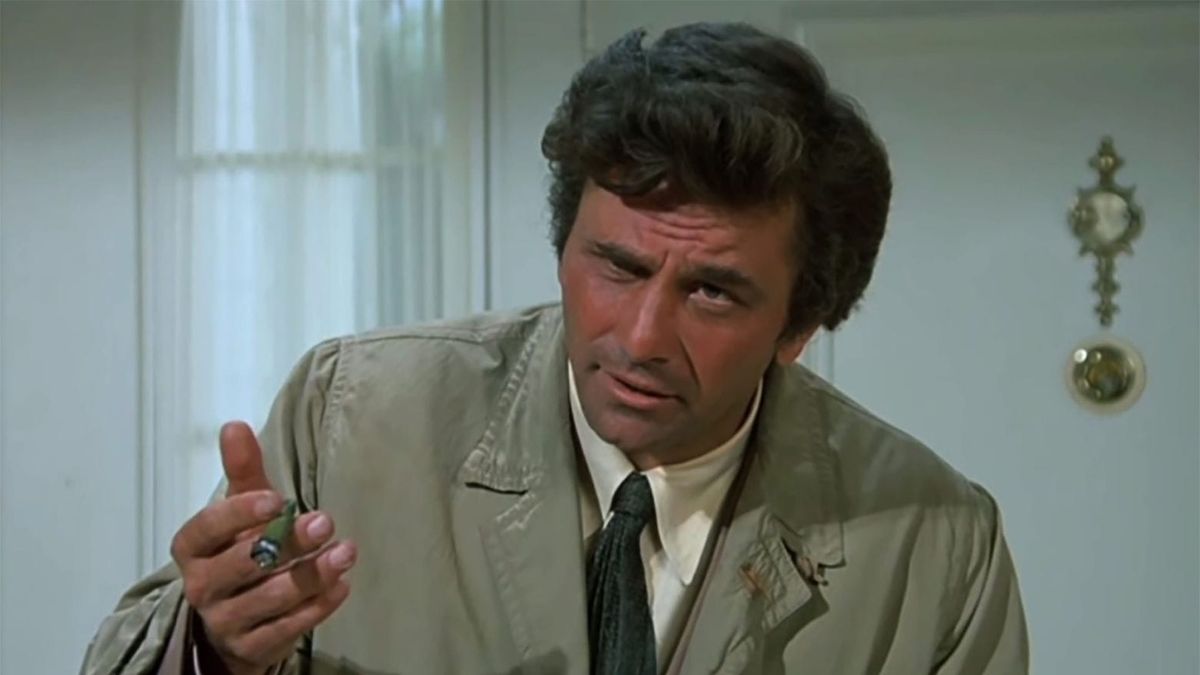
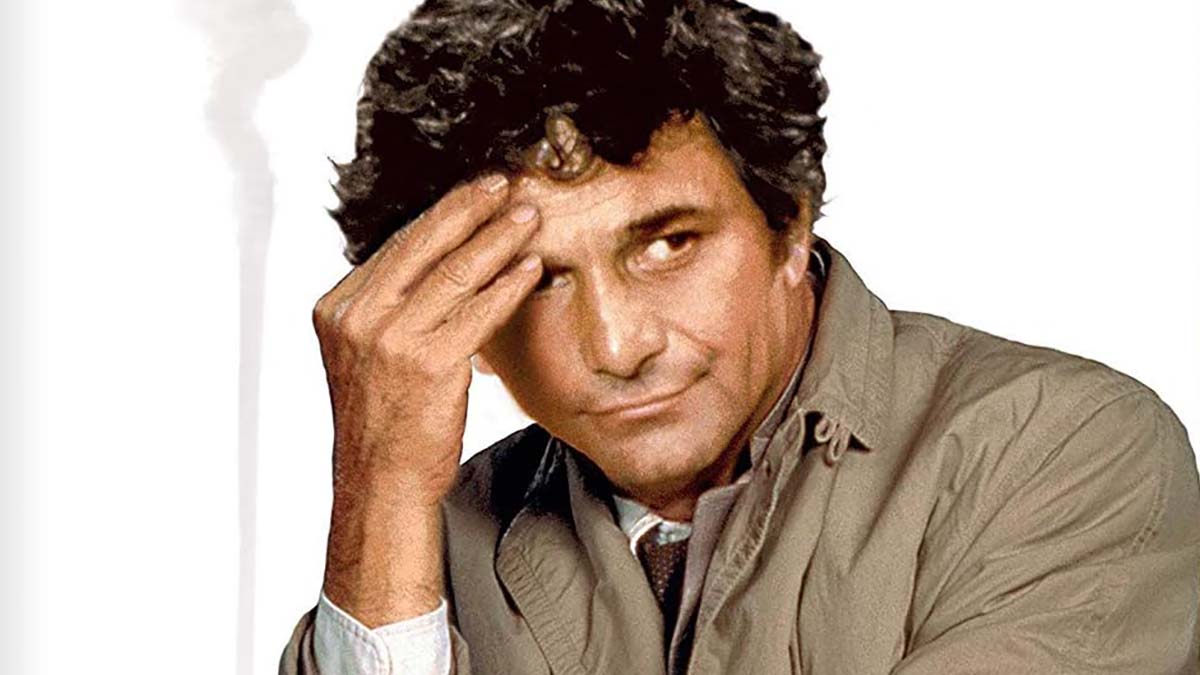
I started watching Columbo in March or April of this year, prompted by reading of older mysteries, such as by Dorothy Sayers, and I finally decided to investigate this show. And what a revelation. I'm afraid I have a little crush on Peter Falk. The first 5 seasons are really the true heart of this show; afterward, it falls apart, more interested in the gags and not the story of redemption, refusal, and reconciliation.
Columbo is often treated as a joke, both culturally and in-show, but we are let in on the joke that he is not. He is a wonderfully pastoral detective--the violence is so thin here--its all around conversation and conversion and grace. Oh, the grace Columbo shows many of the killers. "Lady in Waiting" is one of those episodes where the killer is painted in a redeemable light and we see Columbo's troubles with the reconciliation when he is outside smoking his cigar, shoulders slumped, a slight shake in his head. This also tells we viewers that are weallowed to question if the capture of a murderer is a true reconciliation of a wound in society, or if the killing and capture are just other symptoms and not a true healing.
I love it.
Any Port in a Storm. Any episode with Jack Cassidy as a villain. Leslie Nielsen as a dramatic actor (shocked me, but of course he's wonderful). Dick van Dyke as a villain, which I refuse because no. Sorry. Not Dick van Dyke!
Both Janet Leigh and Peter Falk made me sob during "Forgotten Lady," an incredible episode. Ruth Gordon delighted in her episode, probably the strongest in Season 7. I adored the 70s and 80s aesthetics. There was a texture to these episodes, a lived-in quality, even a bit of ugliness. I hate to say it because its such a nebulous description, but it felt real.
I did not watch the 90s Columbos (although I have a faint memory that I did with my grandmother). Something falls off between Season 5 and Season 6, a believing of his own hype (Falk's, I think) and it loses a bit of its charm, which is, of course, Columbo's friendships with this murderers. A promise that reconciliation exists beyond punishment.
Something to cling to as we entered the new tax law, which drives me insane every day, and luckily, the arrival of K Pop Demon Hunters, which is also about grace and empathy and friendships with murderers.
They had no business making this movie this good
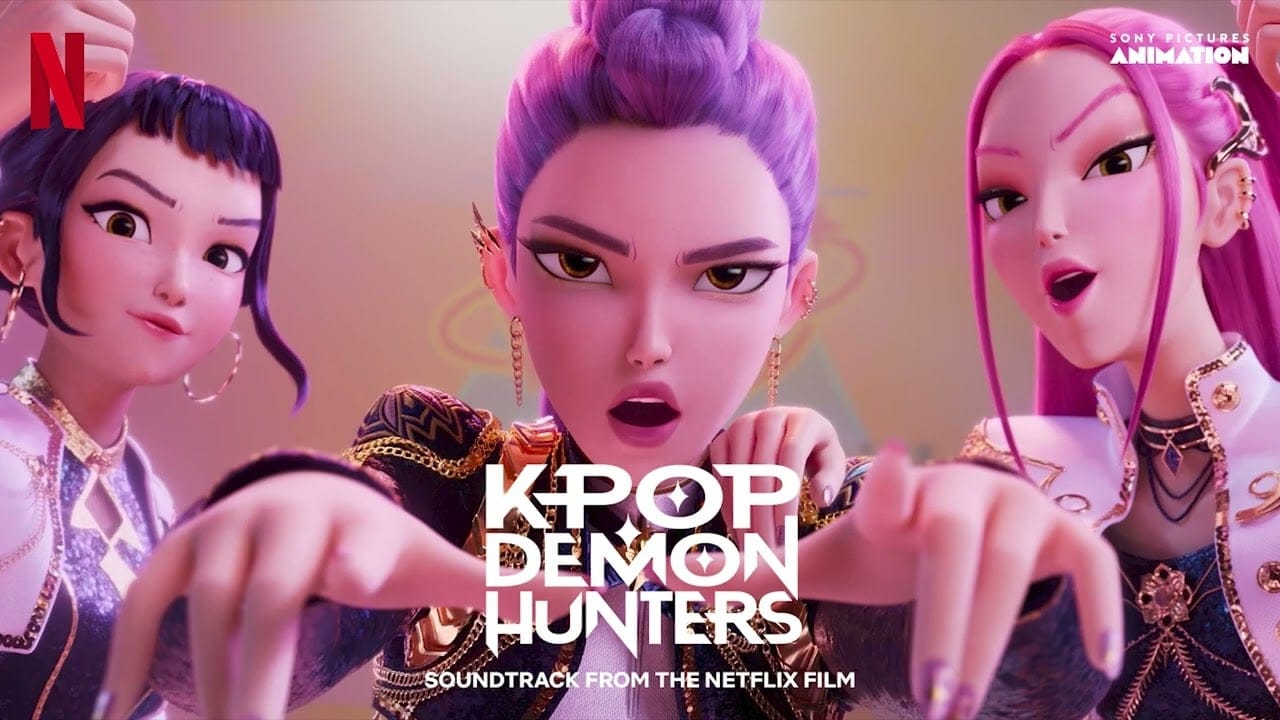
Columbo and KPDH both have the interesting connection that neither of them were expected to become what they did. Columbo was just supposed to be Sunday murder hour, filling in during the summer, when no one watched and oops! KPDH was a little movie that Sony gave to Netflix, expecting it to maybe do somewhat well with the children during the summer, not the hit of the year.
This movie is gorgeous. One of the things that I think that KPDH, and Sinners (my best movie of the year pick), understands is that the medium is the messenger. Their visuals are stunning. They live with you. I may have cried at the beauty and the sass in the How Its Done on the plane in the same way I cried during the barn scene in Sinners in the same way that I cried during the crossing of the desert in Lawrence of Arabia. Do films allow beauty anymore or does that violate the TOS of content? Do we think beauty is something that can be packaged and sold, and not something with which characters can interact?
Kafka argued that moral literature--literature that reminds us of our foundings and our connections--must be an axe for the frozen sea within. To help us with empathy, with rebuilding connections, with seeing ourselves and our place in the world. KDPH does this work with its emphasis on friendship, with Rumi and her marks, her fraught relationship with Celine and, most importantly, with Jinu.
Neither Jinu nor Rumi offer themselves any grace, but with each other, they are finally able to see it. ("Free" in the movie) This is extended to the ending with This is What it Sounds Like, when each girl confesses their own inadequacies and how connection and love and vulnerability allow them to help each other grow and accept themselves.
The music both had a Broadway quality of telling a story and being a well constructed pop song.
I needed a film about grace and self-acceptance as I struggle to accept my own role as a facilitator of this dreadful administration. By helping people file and pay their taxes, am I not abetting this administration in their awful work of terrorizing their own citizens? How complicit am I? Working on a class on the new tax law illuminated even more depravity buried within the One Big Bullshit bill.
A disconnect within my own tax community, who somehow are able to speak on this law as if it were a separate thing, not an insidious infection that seeks to decouple us from our American founding and history and from each other. I find it abhorrent. I cannot offer it any grace, nor can I see a path of refuge, or place, within my tax community. It has become alien to me, in many ways. (There are, of course, always exceptions. My own firm where I work is one, where we stand firmly by our values, which are people and community focused, a port in a storm)
KPDH offers a story about how we tear ourselves apart to fit in a place that doesn't want us, doesn't love us, places conditions on who we are to be palatable and suggests that there are families that can be forged that do not (yes, it is a very queer film despite the nascent romance between Rumi and Jinu). It offers a story of redemption and reconciliation, especially with the three girls and Jinu's own understanding of redemption.
They also had no business making these characters this beautiful. I haven't had a crush on an anime characters since Seto Kaiba in Yu-Gi-Oh. (Luckily, someone pointed out that Jinu is basically Jungkook from BTS, who I think of as a child, and, at last, I can focus rightly on the hottest member in the movie: Mira)

Reading and Writing the World
I finally learned how to knit this year. Is my stuff great? Absolutely not. But sitting anywhere, even in a doctor's office, knitting is far more soothing than doomscrolling.(also failure and mistakes are an important part of being human, AI users)
I cut off a lot of my social media and removed almost all of it from my phone. The only thing I have is Instagram and as more AI infiltrates that, it may be time to say goodbye there. I went on Threads briefly this year and left within a day. It is so exhausting and its not even designed to facilitate conversation, but to provoke a reaction.
I read many good books this year, better than last year in some ways. I told myself this year that I would read more books by diverse authors (because the years I did that, I had far more joy).
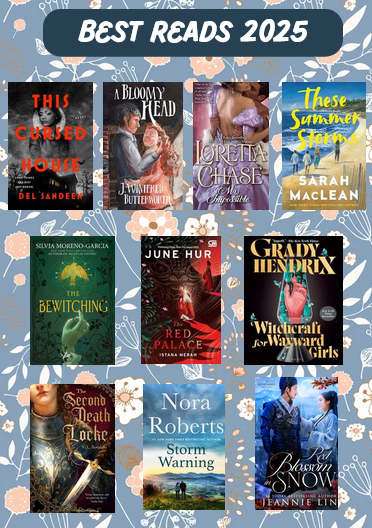
And that worked! More queer authors this year, more Black and Asian authors. I adored June Hur's The Red Palace but I read all of her back catalog this year as well. Mr. Impossible is a book I should've read at 22, when it came out, and it would have healed the woman in me that believed she needed to perform stupidity for men. No, be the nerdy woman and a himbo will fall in love with you. duh (this is the fantasy that romance offers and a promise within feminism) (feminism is more than cishet relationship. Rupert is free from the patriarchy in many ways and feminism offers us a new vision, unattached from these patriarchal restraints where performance counts more than authenticity)
Everyone really should read This Cursed House. And this infographic doesn't have my deep dive in Rebekah Weatherspoon's work this past month. She is a Black romance author and I love the lived-in-ness of her world and her characters. Like shag carpeting in Columbo, she grounds them in the time and place and community.
All of these books are about grace, reconciliation, and love. Even if they aren't a romance, loving one's self is the hardest journey of all. Forgiving one's self--true repair and repentance, especially repair--are the hardest work.
As for my writing, well, Tal went out to several readers and I've got some developmental edits before line edits. It's time to decide what to do with her once this round of edits is done.
I began a new novel, a second-chance romance, where the parents do offer the girl the money to stop dating their son and the girl takes it. They meet each other, by chance, 15 years later, in their 40s, entire lives experienced and yet a spark remains, an interest in who the person has become. Can they get over each other's betrayal? Who knows? (Me. I do. I'm the author). And I can do it without AI because I have a better instrument--my brain!--and I have no desire to destroy the environment when I've got my brain!
It's almost midwinter. The darkest night is near. (This also means its time for the annual re-reading of The Dark is Rising by Susan Cooper).
The Dark is rising. It will continue to rise, if we let it. If we don't give grace and a path to reconciliation. (Not to Nazis, though. No grace for Nazis) If we don't remind ourselves of our own mooring and foundings (see parenthetical above). My own founding is in romance novels. They are a fantasy, novels of equality and conversation and devotion and love. Love really is the greatest thing. (I still hate Love, Actually) because it is the promise of a tomorrow and a promise of understanding. Love isn't that hippy dippy hearts and candy emotion. That's an easily manufactured thing. Love makes people truly seen. Love provides fuel to make the ideal of the world real. You don't fight for something unless you love it. Unless you love others.
We aren't here to make things perfect. We are here to fail (yes, AI users, to fail), and to make mistakes and to love. Love ourselves and one another. Do the difficult work of being vulnerable. Love itself isn't perfect. It doesn't make things perfect. It ruins everything. But ruins and failure are the building blocks toward a new beginning, a reconstructed world, a reconstructed self.
Hey, I'm talking about K Pop Demon Hunters again. Imagine that. (And romance novels!)
I hope 2026 brings you a year of reconstruction and love and grace. Grace, in particular, toward yourself. The world is full of people who delight in cruelty. We cannot let them win. And we don't by clinging to who we love and what we love. We win by saving what we love.
(hey, if you think this sounds like This is What It Sounds Like, you'd be right!)
(yes, I am quoting both Ronnie's speech from Moonstruck and Rose Tico from The Last Jedi. Both of those films are about reconstruction and love. Imagine that (and without AI!))
Repair and Repentance is discussed in Rabbi Danya Rutenberg's excellent book.
If you read this whole thing, please take a moment to treat yourself and let me know which films, books, or TV shows you loved this year. (and your favorite KPDH song!)


